


We believe in the power of sports.


.svg)

The final whistle has blown on Seattle’s first FIFA World Cup 26™ match, but if you spent any time in the city on Monday, you know the story was never just about what happened on the pitch.
It was about the people.
It was about the volunteers welcoming visitors from around the globe. It was about transit operators, public safety teams, venue staff, hospitality workers, photographers, community leaders, neighborhood organizations, business owners, and thousands of fans who helped transform Seattle into a global stage.
And what a stage it was.
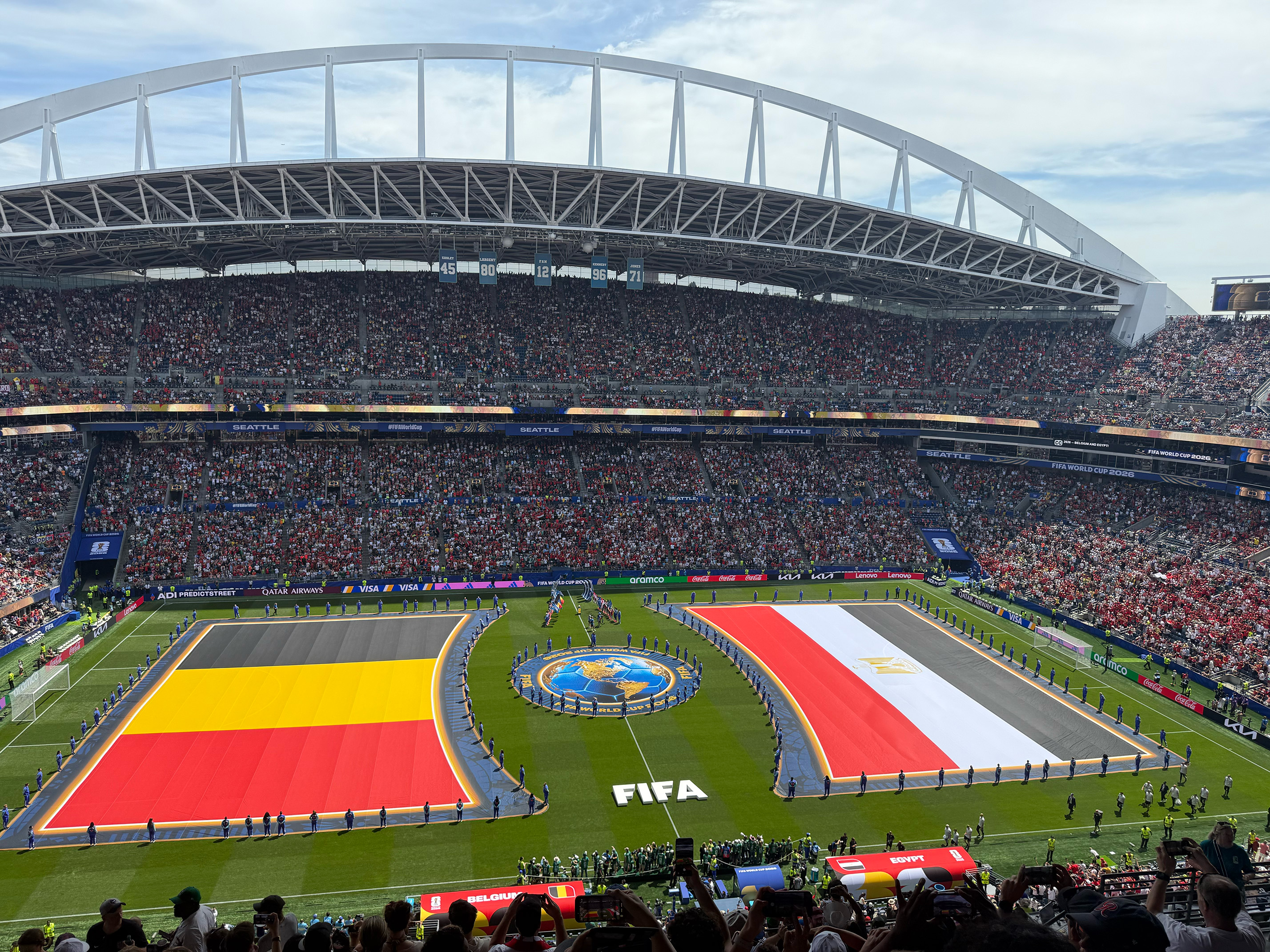
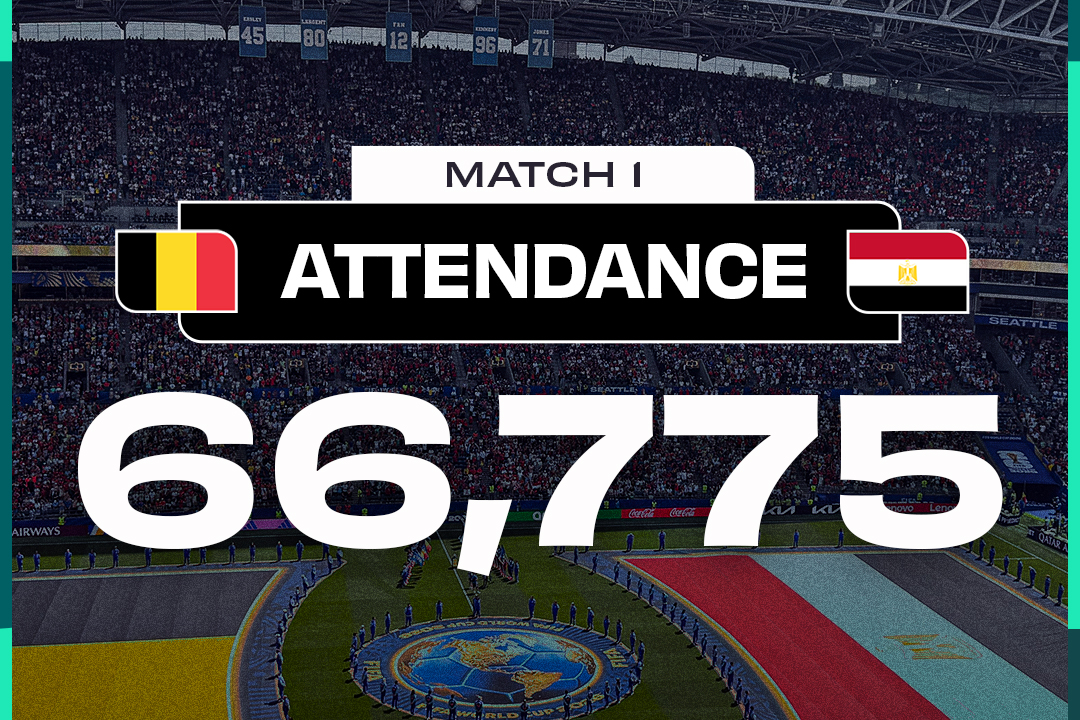
A crowd of 66,775 filled Seattle Stadium for Belgium and Egypt, officially launching Seattle’s World Cup journey and delivering one of the largest sporting events in our city’s history. Fans poured into Pioneer Square hours before kickoff. March to the Match processions flowed from the Waterfront, Victory Hall, and throughout downtown streets. Flags waved. Chants echoed. Multiple languages filled the air. For one afternoon, the world gathered in Seattle.
Even before kickoff, Seattle’s sports community showed up in force. The Seattle Mariners made a special appearance during pregame festivities. Fan celebrations stretched from neighborhood watch parties to public viewing events across the region. Everywhere you looked, there was evidence of years of planning finally becoming reality.
The Belgian supporters may have stolen the show before the opening whistle.
Victory Hall transformed into a sea of red as Belgium’s famed Red Devils gathered hours before the match. Fans packed the venue, enjoyed a cold one on one of Seattle’s hottest days of the year, and sang their way toward Seattle Stadium. The atmosphere felt less like a pregame and more like a festival, a reminder that the World Cup is as much about culture and community as it is about competition.

The march itself was electric. Streams of supporters flowed through SODO and into downtown, creating a visual display of global fandom that Seattle rarely gets to experience on this scale.
Then there was the weather.
Seattle is known for many things. Ninety-degree temperatures in June are not usually one of them.
As a historic heat wave settled over the region, players battled not only each other but the elements. FIFA’s hydration break protocols became a necessary part of the match as temperatures climbed into the 90s and both squads managed the conditions throughout the afternoon. The heat was relentless, but so was the action.
Egypt may have delivered one of the most impressive performances of the day.
Led by Mohamed Salah, the Pharaohs struck first when Emam Ashour found the back of the net, stunning a heavily favored Belgian side. Egypt’s speed, organization, and confidence had much of the crowd believing they were witnessing a signature World Cup upset in the making. Salah orchestrated attacks, Egypt defended fearlessly, and for long stretches looked every bit the stronger side.
Then came Romelu Lukaku.

The Belgian striker entered the match in the second half and immediately changed everything.
Within moments of stepping onto the field, his physical presence created chaos in the Egyptian defense, ultimately forcing the own goal that leveled the score. It wasn’t flashy. It wasn’t complicated. It was simply the impact of a player who changes the atmosphere the moment he arrives.
Watching Lukaku made me think about Seattle sports.
Who is our version of Romelu Lukaku?
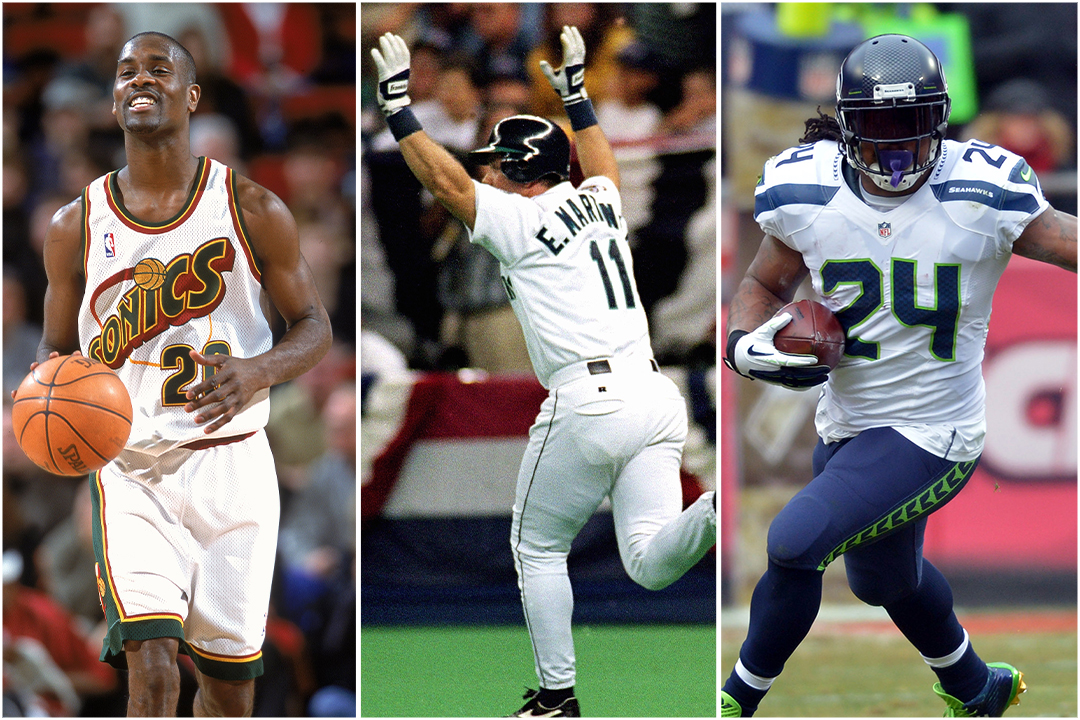
Is it Gary Payton, arriving with confidence, swagger, and enough trash talk to tilt momentum before the game even begins?
Is it Edgar Martinez, calmly stepping into the biggest moment and delivering exactly when his city needs him most?
Or is it Marshawn 'Beast-Mode' Lynch, whose mere presence creates uncertainty, excitement, and absolute chaos for the opposition?
The more I thought about it, the more I realized Lukaku is probably a little bit of all three.
A game-changer.
A closer.
A force of nature.
The type of athlete whose impact extends beyond statistics and finds its way into the energy of everyone around them.
Along the way, SSC's Mara Mote spoke with a family that had traveled down from Vancouver, B.C., specifically for the match.
“We will for sure be walking downtown, and enjoy the atmosphere. Go Pharaohs!” one fan said with a smile before heading toward the stadium.
That sentiment seemed to capture the spirit of the day. For many visitors, the match was only part of the experience. The city itself had become an attraction, with fan celebrations, public art, watch parties, and neighborhood activations creating reasons to stay long after the final whistle.
Credit also belongs to the City of Seattle and the countless public agencies helping manage the event. Temporary street closures throughout SODO and key downtown corridors created pedestrian-friendly pathways that made it easy for supporters to move between Victory Hall, Pioneer Square, the Waterfront, fan zones, and Seattle Stadium.
The result was a city that felt connected. Fans weren’t rushing from parking lots to seats. They were experiencing Seattle on foot, discovering neighborhoods, businesses, and fellow supporters along the way.
For a first World Cup match, the operation felt remarkably smooth and showcased what is possible when public agencies, community organizations, businesses, and sports leaders work together toward a common goal.
One of the most rewarding sights of the day was right there on the sidelines. Seeing the people documenting history as it unfolded. Longtime Seahawks and Sounders photographer Corky Trewin, who is no stranger to Lumen Field, was once again on the sidelines capturing another Seattle sports moment alongside many of the region’s photographers and visual storytellers.
Nearby was Seattle Times photographer Dean Rutz. Seeing Corky and Dean working side by side again, nearly 38 years after first documenting Seattle sports together, was a reminder that Seattle’s first FIFA World Cup match wasn’t just being witnessed—it was being documented by the people helping tell the story of this city and its sports culture for future generations.
Across Seattle and throughout the region, legacy projects, murals, fan zones, watch parties, community activations, youth programs, and cultural celebrations are creating experiences that reach far beyond ninety minutes of soccer. This tournament was never designed to live solely inside the stadium walls. It was built to touch neighborhoods, businesses, families, and future generations.
“It feels a little surreal that it’s actually here,” said Seattle Sports Commission President & CEO Beth Knox in a post-match interview with Mara Mote on Occidental Ave. “There’s been such a long build up since 2017 and we’ve been waiting for this moment to happen for so long that it’s a little hard to process that it’s actually here.”
Standing inside a packed Seattle Stadium, surrounded by 66,775 fans from around the globe, it was hard to disagree.
That’s exactly what we’re seeing.
The attendance number is impressive.
The match result is memorable.
But perhaps the biggest success of all is watching Seattle embrace its role as a Host City.
Because while Match 1 may be complete, the city feels more energized than ever.
Next up is USA versus Australia on Friday, June 19, another opportunity for fans to experience the world’s game in one of the world’s great sports cities. Join the March to the Match from Victory Hall. Visit a fan celebration. Explore a neighborhood activation. Meet supporters from around the globe.
The tournament has arrived.
The world is here.
And if Monday was any indication, Seattle is ready for an unforgettable summer.
- Johairo (Jo) Lopez
Director of Marketing & Creative Services, Seattle Sports Commission
Stay up to date with Seattle Sports Commission